Five Paper Weights Every Small Business Should Know
Posted by Helen Brooks ·
Start with the numbers on the label
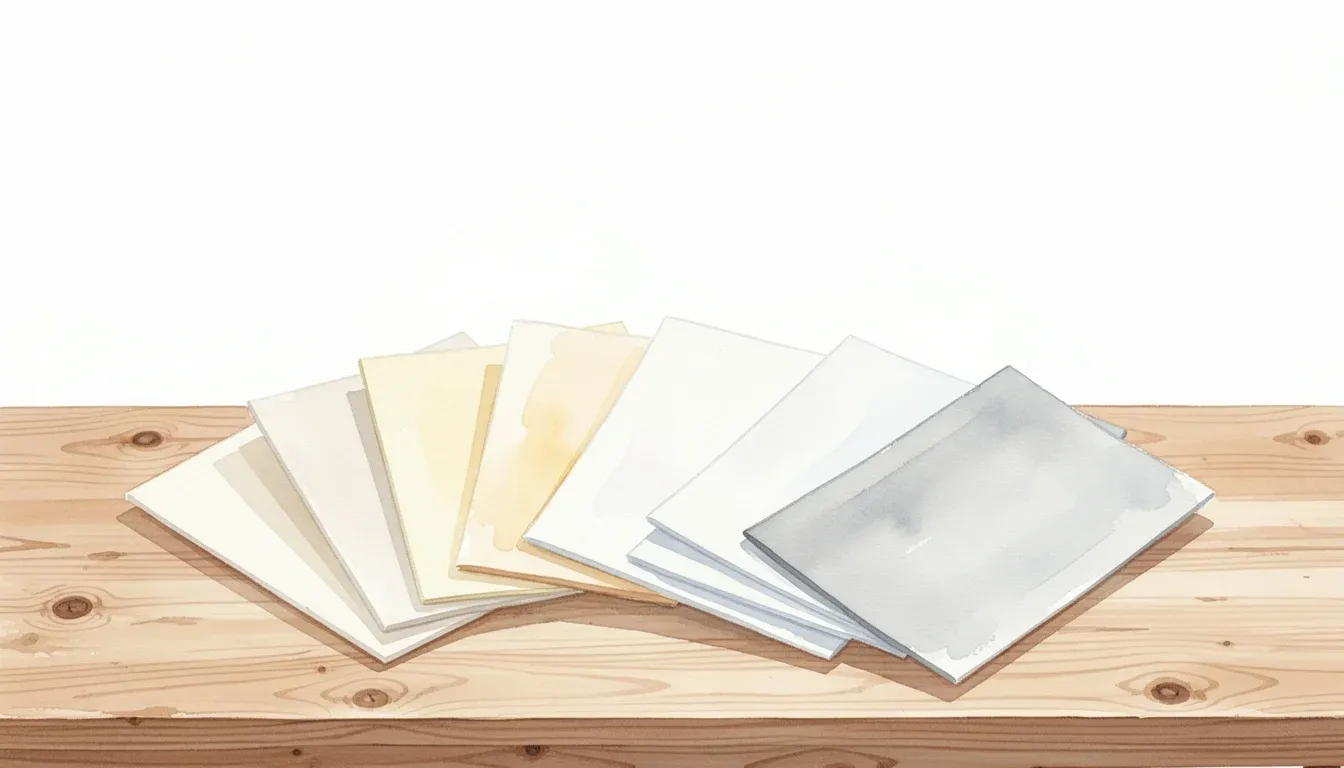
Paper weight is usually written as gsm, grams per square metre. It tells you how much one square metre of the sheet weighs, so a higher number means a heavier sheet. It does not tell you how thick the paper feels, though. Two papers at the same gsm can feel quite different depending on how they were made, whether they are coated, and how dense the fibres are. A bulky uncoated sheet can feel thicker than a smooth coated one that weighs the same. Ask your printer for the gsm and the finish together, and if you can, hold a sample before you commit.
The six options below cover most of what small businesses order. They run from ordinary copier stock to heavy card, and each one has a job it does well and a place where it lets you down.
The light end: 80 to 130 gsm
- 80 gsm uncoated. This is the everyday office sheet, the paper in most laser printers. It suits internal forms, letters, and drafts you will print in-house. Its trade-off is that it looks flat for anything customers see. Ink soaks in, colours look a little muted, and the sheet can feel limp in the hand. It also shows through if you print double-sided.
- 115 to 130 gsm coated or silk. This is a common choice for flyers, menus, and handouts that need to look sharper than copier stock without costing much more. Coating keeps the ink on the surface, so photos and solid colour look crisper. The trade-off is that a coated sheet at this weight can feel slightly thin, and it shows fingerprints more readily than uncoated stock. Matte or silk finishes hide marks better than gloss.
The middle: 170 to 200 gsm
- 170 gsm coated. This is the usual weight for a leaflet or a folded brochure. It has enough body to survive being folded and shoved into a bag, but it still folds cleanly without cracking along the score. It suits a small business that wants a leaflet to feel considered without the stiffness of card. The downside is that a folded leaflet at this weight can still feel a little soft if it is the only thing a customer handles, and a thicker fold can crack on some coated stocks if the scoring is not done properly.
- 200 gsm uncoated. Uncoated stock at this weight has a pleasant, natural feel that suits letterheads, invitations, and menus that lean toward a crafted look. It takes a rubber stamp or a foil well. The trade-off is colour. Photos on uncoated paper look softer and less punchy, so it works best for text-heavy pieces or designs that use bold, flat colour.
The heavy end: 250 to 400 gsm
- 250 to 300 gsm card. This is the standard weight for business cards, postcards, and covers. It feels solid when someone takes it from you, and it holds its shape in a wallet or on a desk. Its limits are practical. Heavy card will not fold as easily as paper, so it is a poor choice for anything that needs to crease, and it costs more per sheet, which adds up quickly on large runs.
- 350 to 400 gsm card. At this weight the card is stiff enough for display stands, hang tags, and premium cover stock. It gives a strong first impression, especially with a matte laminate. The trade-off is that it is awkward to cut cleanly on some equipment, and it needs careful die-cutting or scoring if you want folds. Ask whether your printer can handle it on the same press as the rest of the job, because some workshops send heavy stock to a different finishing line and that changes the timing.
Choosing among these comes down to what the piece has to do. A quick flyer handed out at a market can live on 115 gsm coated stock. A leaflet meant to be kept for a month probably needs 170 gsm. A card that sits in someone's wallet for a year should be 300 gsm or heavier. Price matters too, but the cheapest sheet often costs you more in the end if it makes the work look like an afterthought.