Printed Extras for a Game Night at Home
Posted by Helen Brooks ·
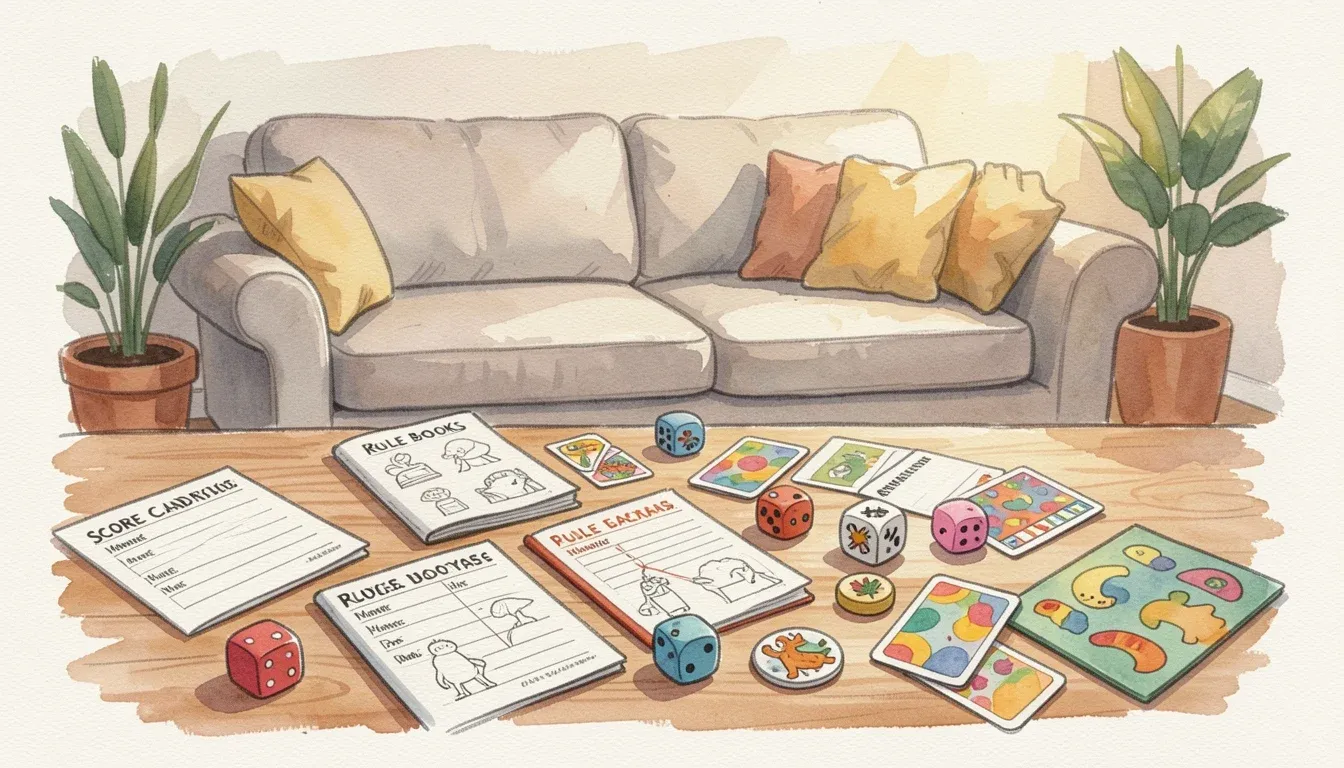
Scoring and keeping track
Tear-off score pads. A small pad of A6 or A5 sheets with columns for each player suits anyone who plays the same card or dice game every week and wants a stack of ready sheets. The trade-off is paper weight. Cheap pads are thin, so a felt-tip pen will bleed through to the next sheet, and a ballpoint can tear the top sheet when someone presses hard.
Laminated dry-erase scorecards. Print the grid once, laminate it or slip it into a clear sleeve, and use a wipe-clean marker. This suits groups who play for several evenings and want to reuse the same sheet. The downside is cost per sheet and the fact that laminating a page with a lot of fine lines can make the grid look soft. Keep the columns wide and the text large.
Cards that get handled a lot
Question or trivia cards. If you print a deck yourself, put the question on one side and the answer on the reverse, and check that the two sides line up when you flip a sheet. Print on a heavier stock than ordinary copy paper, or the cards will curl after one evening. The trade-off is cutting. Hand-cut cards rarely come out identical, so cut them with a guillotine or a steel rule if you can, and round the corners if the deck will see a lot of shuffling.
Reference cheat sheets. A folded A5 or A6 card showing turn order, scoring values or a quick rules summary suits any game with a lot of small rules that people forget between sessions. Keep the text large enough to read across a table, which usually means fewer words than you think you need. The trade-off is that a dense rules card looks tidy on screen and unreadable in real life.
Coasters. Printed coasters work well as a small thank-you or a way to keep drinks off a board. Coated card gives crisp colour and wipes clean. Uncoated board soaks up a spill and can stain. Choose based on whether the coasters will be wet, and test one with a drop of water before you print a full set.
Table pieces and small decoration
Name tents. A folded card with each guest's name on both faces suits a dinner-style game night where people sit in set places. Heavier card stands up better than copy paper. The trade-off is that folded tents can be knocked over by elbows, so a slightly wider base helps.
Prize tickets or tokens. Small numbered tickets handed out for winning a round add a bit of fun and make it easy to settle a final tally. They are quick to print on a home printer in batches. The trade-off is that they are easy to lose or mix up, so give each one a number and keep a simple record of who holds which.
Invitations and the things that go in the bag
Printed invitations. A single A5 card with the date, time and a one-line description of the game is enough for most groups. A tri-fold works if you want room for a short rules summary or a map. Printing at home is quick for a dozen cards, but colour registration and paper weight will vary from one printer to another, so run one test sheet first. For larger batches, a local print shop is often the more predictable option.
None of these extras need to be elaborate. A plain score pad that people can actually write on is worth more than a glossy card nobody can read in dim light. Pick the one or two items that solve a real problem at your table, print a test copy, and see how it handles a few rounds before you print the full set.
If you would rather begin with existing designs than start from a blank page, it is worth looking at what Mc Games has available. Read any terms of use before printing multiple copies for a group.